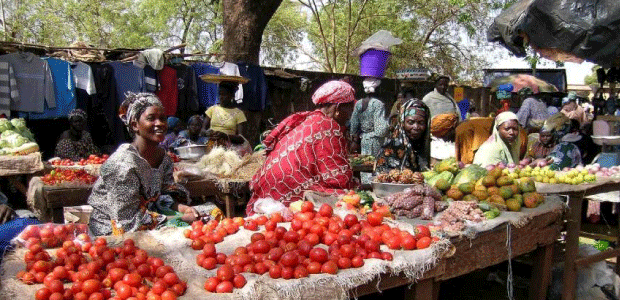
Your partner’s education shapes your survival
People with higher levels of education tend to live longer, healthier lives. However, education is not only an individual resource – its benefits may also be shared between partners. Using … Read more

School attendance and grades. Employment and characteristics of the labour market. Wages, salaries and pensions. Other dimensions capable of creating (reinforcing, attenuating) hierarchical or power structures in societies.
People with higher levels of education tend to live longer, healthier lives. However, education is not only an individual resource – its benefits may also be shared between partners. Using … Read more
Lifespan is uncertain, even for well-informed individuals. Sha Jiang, Wenyun Zuo, Zhen Guo and Shripad Tuljapurkar show that this irreducible demographic risk increases with delayed pension claiming and hits male … Read more

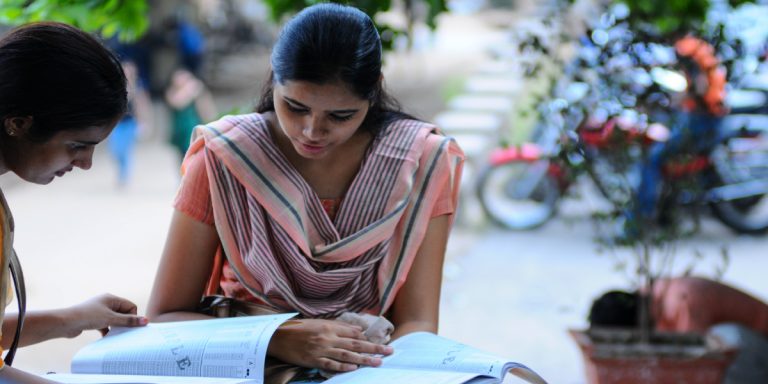
Young people in the Global South are following increasingly diverse and ever-changing paths to adulthood. Yet, inequalities persist. Shelley Clark and Khandys Agnant show that despite impressive gains in female … Read more

Child benefits are never explicitly included in pension systems, although mothers often receive other forms of compensation, such as provisions for earlier retirement or higher pensions. There are good reasons … Read more
Pay-as-you-go (PAYGO) pension systems are problematic: commitments are meant to be long term, but reality changes rapidly, which forces a frequent revision of rules. Gustavo De Santis suggests an alternative … Read more
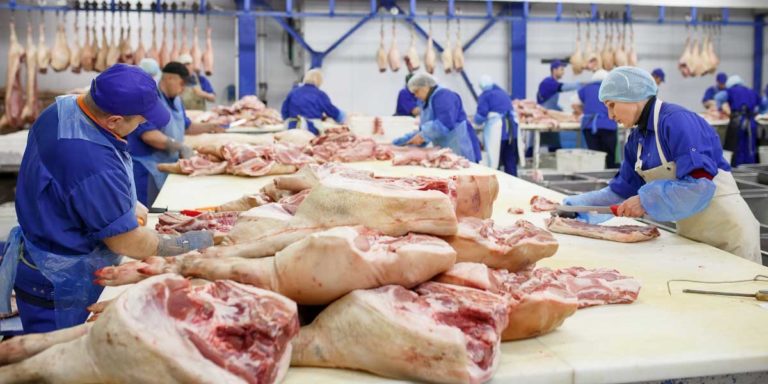
The demographic dividend describes the economic growth potential based on shifts towards a larger share of working-age population when fertility declines in the course of the demographic transition. Markus Dörflinger … Read more

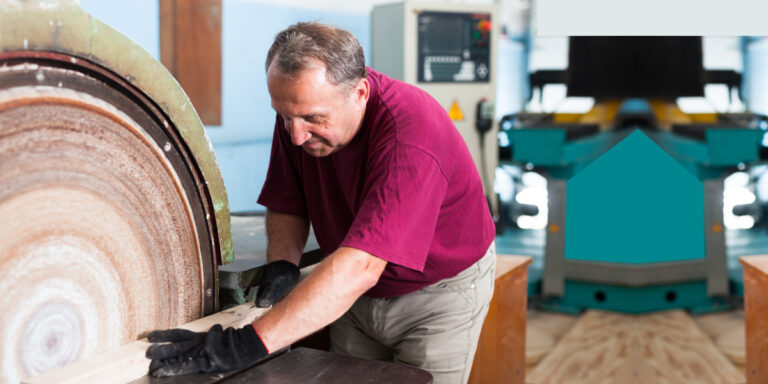
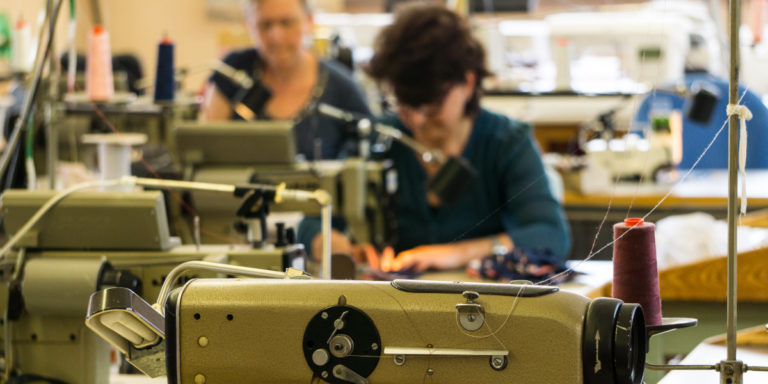
The gender wage gap persists, especially among mothers. Alícia Adserà and Federica Querin show that despite low wages in predominantly male occupations that depend on heavy machinery, women (and chiefly … Read more

Over the last decades, the working population in Europe has become older, more feminized, and more educated. However, Álvaro Mariscal‐de‐Gante, Amaia Palencia‐Esteban, Sara Grubanov‐Boskovic and Enrique Fernández‐Macías argue that female occupational … Read more


In the United States, the Hispanic population was hit harder by the COVID-19 pandemic than the majority (non-Hispanic White) population. Elizabeth Arias and Betzaida Tejada-Vera investigate the matter and highlight … Read more
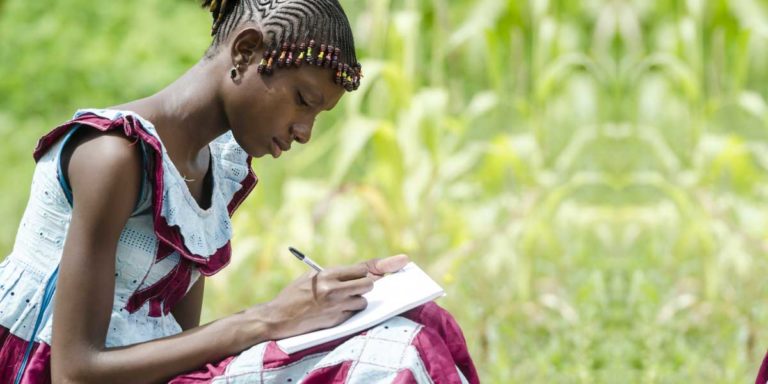
Latin America faces a unique societal challenge: high numbers of young adults, especially women, who neither work nor pursue education, known colloquially as “nini.” Using census microdata for 12 countries, … Read more
Rapid population aging may undermine the viability of the German pension system. Is working longer a remedy? Christian Dudel, Elke Loichinger, Sebastian Klüsener, Harun Sulak, Mikko Myrskylä analyse what is … Read more
All over the world, children’s education mirrors that of their parents. This, together with differential fertility, affects the distribution of educational outcomes in the next generation. In Sweden, however, differential … Read more
Children are not all equally influenced by parental separation. Wiebke Schulz shows that children with parents from a lower educational background have fewer chances of completing mid-secondary education. This is … Read more
There is a positive association between tertiary education and internal migration across Europe. Miguel González-Leonardo, Aude Bernard, Joan García-Román and Antonio López-Gay find that this holds also for immigrants: they … Read more
Racial disparities in socio-economic and health outcomes are a topic of concern in the United States. As Deepthi Kolady and Weiwei Zhang show, they have also played a major role … Read more
How does adolescent fertility affect high school completion for boys and girls in Chile? Controlling for socioeconomic and academic selectivity, Viviana Salinas and Valentina Jorquera-Samter find that a teenage mother … Read more
Low and declining female labour force participation in India has been a puzzle and a key policy question in the recent past. Chhavi Tiwari and Srinivas Goli argue that it … Read more
India’s economic sector faces a reckoning with its ageing population. Aparajita Chattopadhyay and David E. Bloom‘s analysis, based on the Longitudinal Aging Study in India (LASI), indicates that health is … Read more
The centrality of women’s economic empowerment in achieving the sustainable development goals has attracted high level policy interest. Data limitations impede knowledge of its extent in Africa. Demographic and health … Read more
An interview with Vladimir Gimpelson, director of the Centre for Labour Market Studies at the Higher School of Economics in Moscow, the Russian Federation. Introduction The Bell is a Moscow … Read more
Children and youngsters who experience parental divorce or parental death often attain lower levels of education than their peers, but the impact of these adverse events is far from uniform, … Read more
Analysing consecutive birth cohorts in 21 sub-Saharan African countries over the 20th century, Joerg Baten, Michiel De Haas, Elisabeth Kempter and Felix Meier zu Selhausen find that gender gaps first … Read more
Ester Rizzi and Younga Kim examine retirement intentions of 50-64 year-old mothers in Europe by family and employment trajectories. They find that experiencing work interruptions, having a higher number of … Read more
NDC (notional defined contribution) schemes are commonly believed to be the best kind of pay-as-you-go (PAYG) pension systems: actuarial equity and individual flexibility in accessing retirement are their main strengths. … Read more
A strong positive association exists between children’s education and parental health in India. Berenike Thoma and Jan-Walter De Neve explain that this positive relationship persists when controlling for a wide … Read more
Results from 2020 population censuses for the United States and China made headlines about population collapse, baby busts and demographic decline. Lopsided lamentations have given little attention to the social, … Read more
In the interest of boosting the long-term rate of economic growth in low- and middle-income countries, policymakers are advised to pursue investments in human development that improve reproductive and general … Read more
Examining the long-term consequences of the family life course for women’s earnings in 22 European countries, Joanne S. Muller, Nicole Hiekel & Aart C. Liefbroer find no earnings gap between mothers … Read more
Lily Casura, Ricardo Lowe, Jr., Cristina Martinez, Sarah Serpas, Victoria Castellanos, and Joachim Singelmann examine the sociodemographic characteristics of frontline workers in the United States in terms of race/ethnicity, sex, … Read more
Even in Belgium, despite its strong work-family reconciliation policies, childbearing pushes couples towards more traditional gender roles: when one member of a couple exits the labour market or takes parental … Read more
In recent decades, the proportion of individuals living alone has increased in many European countries. Glenn Sandström and Lena Karlsson compare the living arrangements of the working-age population, showing that … Read more
Wolfgang Lutz, Jesus Crespo Cuaresma, and Nicholas Gailey show that the “demographic dividend” does not result from the opening of “a window of opportunity” caused by a declining youth dependency … Read more
Fostering is common throughout sub-Saharan Africa, but the motivations for fostering and consequences for fostered children remain unclear. In northern Tanzania, Sophie Hedges, Rebecca Sear, Jim Todd, Mark Urassa, and … Read more
Population ageing is inevitable, but its negative consequences on the future labour force of the European Union, up to 2060, could be greatly attenuated if women and immigrants were more … Read more
As fertility declines in low- and middle-income countries, the time women devote to childrearing may also be reduced, opening up possibilities for women to pursue educational and employment opportunities. John Bongaarts, … Read more
Malthus is long dead, but his ideas live on and are still widely debated today. Massimo Livi Bacci argues that he was probably right, after all. Malthus and the limits … Read more
Repeating a school year is an ineffective pedagogical practice: it fails to improve the academic performance of those who are held back, and in some cases it may even make … Read more
Trends in labour force participation and health status of older adults in Latin America reveal a puzzling pattern: the greatly improved health (and labour) conditions of recent years have translated … Read more
Christian Dudel and Mikko Myrskylä study how the length of working life has developed in the U.S. since the early 1990s. While overall life expectancy has increased, there has been … Read more
Living standards have risen generally, and poverty rates have fallen across Sub-Saharan Africa since the late 1990s (Chen and Ravallion, 2013). Less is known about how different groups have fared.In … Read more
On average, in the United States, men earn more per hour when married than when single, even after adjusting for differences such as age and education. However, despite the suggestive … Read more
Our research (Bernardi & Boertien 2016a; 2016b) has led us to the conclusion that, while children growing up without one parent in the household do have lower educational attainment,family structure … Read more
We all die one day, but we are not all equal in this respect, because death tends to strike at different ages. Take men and women, for instance: in France, … Read more
A fashionable but controversial concept The ‘demographic dividend’ has become a fashionable concept over the past 20 years, and was the focus of the recent UAPS conference held in South … Read more
Let us look at four types of objective that can legitimize population policies in a given context: reducing mortality (Vallin et Meslé, 2006), limiting fertility if the population is growing … Read more
“Time and chance happeneth to them all. For man also knoweth not his time: as the fishes that are taken in an evil net, and as the birds that are … Read more
The sooner (you are born) the better – initially. The existing empirical evidence suggests that the first-born earn a wage premium with respect to the later-born. One reason is better … Read more
It is heartening to see the renewal of interest in demography by at least some African governments. A share of the credit for this can be attributed to the discourse … Read more
Pay-as-you-go (PAYG) pension systems are frequent in OECD countries, usually in combination with some form of funding (OECD 2014, 2015), and they have been very extensively studied. But their reputation … Read more