
Parenthood is no longer the default in Canada
Canada’s fertility rate has fallen sharply over the past decade. New research suggests that the decline is not only because people face obstacles to having children. As Benoît Laplante and … Read more


Canada’s fertility rate has fallen sharply over the past decade. New research suggests that the decline is not only because people face obstacles to having children. As Benoît Laplante and … Read more

Projected population growth of about 2 billion in Africa and elsewhere will contribute to poverty, poor reproductive health, environmental degradation and climate change. Frank Götmark, Chukwuedozie Ajaero, Mohammad Mainul Islam, Rhoda … Read more

First marriage in South Korea has declined sharply over the past three decades. This is not simply a story of later marriage. Even after accounting for delayed timing, Sam Hyun … Read more

Dutch kinship network data, Vera de Bel argues, suggest that the Dutch baby boom has trickled down from one generation to the next, leading to larger numbers of aunts, uncles, … Read more

The emotional consequences of “silver splits” (at age 50 years or over) depend on one’s ties with adult children. When these ties are close, Lisa Jessee and Deborah Carr observe, … Read more

Using four Pakistan Demographic and Health surveys Rashid Javed, Mazhar Mughal and Thierry Lorey find that women married before 18 show stronger son preference and differential fertility stopping patterns. Women’s … Read more

Working mothers who use formal childcare for their first child are more likely to have a second, Jonas Wood says. While part of this effect reflects differences in who uses … Read more

In 2024, nearly 78 per cent of women aged 15–49 who wanted to avoid pregnancy used modern contraceptive methods. Despite this progress, more than 250 million women of reproductive age … Read more

Rapid decline in a country’s birth and death rates creates a “kinship gap”, leaving people born just years apart with vastly different family support networks. Sha Jiang discusses the ensuing … Read more

Drawing on data from 26 European countries, Aude Bernard, Patricia McMullin, and Sergi Vidal uncover a strong association between the number of internal moves and childhood loneliness. Childhood migration and … Read more

Marriage and family ties in the Middle East and North Africa (MENA) are undergoing profound changes. While traditions persist, young people now marry later, fewer cousin marriages occur, and family … Read more

For decades, the majority of Americans have reported ideal family sizes of two children, yet actual birth rates are falling well below reported ideals. Julia Behrman, Emily Marshall, and Florian … Read more

Polygynous unions are on the decline in sub-Saharan Africa, although uncertainty surrounding the prevalence and characteristics of children in these households remains. Emily Treleaven and Emma Banchoff find that the … Read more

Denmark’s 2002 family reunification policy required foreign spouses to be 24+ and have stronger ties to Denmark than elsewhere. This reshaped union formation and fertility among immigrants, further increasing educational … Read more

Comprehensive contraceptive transition theory, Shireen J. Jejeebhoy and Zeba Sathar argue, must prioritize women’s agency and gender roles, particularly the ability of women and girls to make independent contraceptive choices, … Read more

Stefania Molina’s research reveals that, in Colombia, separated and cohabiting mothers experience higher levels of intimate partner violence during pregnancy than married mothers. Disparities in low birth weight across partnership … Read more

Poland’s ambitious “Family 500+” program offered substantial monthly payment to families with children. While the program modestly increased overall fertility in the short-term, its effects varied significantly by age and … Read more

America leads the world in single-parent household rates, with the large majority of those households missing a father. Despite the public’s recognition of the importance of two-parent households for children … Read more

America is facing a child care crisis: care services are costly and scarce and fail to meet the needs of families. The majority of U.S. voters, Joseph Chamie opines, feel … Read more

In Malawi, in a trial carried out between 2016 and 2018, children grew taller and exhibited more rapid cognitive development when their mothers’ access to family planning and reproductive health … Read more

Katya Ivanova and Nicoletta Balbo examine the link between societal pessimism and fertility decisions. Using prospective data from the Dutch LISS panel, the authors illustrate that broader concerns about the … Read more

Return migrants’ fertility is likely to differ from that of nonmigrants and migrants due to migration experiences, norms, adaptation, and socioeconomic factors, but knowledge of their fertility behavior is limited. … Read more

Household structures reflect and affect social, economic, and demographic dynamics. Albert Esteve and Maria Pohl use the new CORESIDENCE database to explore the transformation of households over the last five … Read more

As union dissolution becomes more frequent around the world, the living arrangements of children of separated parents have become an important issue. Joint physical custody (JPC) is believed to be … Read more
Little is known about the composition of kinship groups and family members outside the household, and how this evolves by age and over time. Martin Kolk and colleagues, exploiting exhaustive … Read more

As marriage declines and divorce increases, partnership trends and household composition become increasingly determined by trends in the formation and dissolution of non-marital cohabiting unions. Marika Jalovaara and Linus Andersson … Read more

With rising infertility and increasing demand for fertility treatments globally, understanding the role of medically assisted reproduction (MAR) in population demographics and family formation patterns has never been more important. … Read more

Children are not all equally influenced by parental separation. Wiebke Schulz shows that children with parents from a lower educational background have fewer chances of completing mid-secondary education. This is … Read more

Norwegian register data indicate that parents’ mental health deteriorates prior to union dissolution but improves afterwards. In contrast, Øystein Kravdal and Jonathan Wörn note, children seem to experience a continued … Read more

Religion has historically been a pronatalist force, but because it fosters traditional gender role attitudes, it could impede a fertility recovery stimulated by gender equity. Instead, Laurie DeRose explains how … Read more

Adult children with siblings can share caring for ageing parents but only children face this responsibility alone. Jenny Chanfreau and Alice Goisis find that adult only children are more likely … Read more
With a total fertility rate of 0.81 in 2021, South Korea has the lowest fertility rate in the world. Within a generally declining trend, and very low levels globally, Jolene … Read more
In India, the percentage of male births has increased since the mid-1980s. Claus Pörtner ties the continuously growing use of prenatal sex selection to India’s falling fertility among highly-educated women. … Read more

A Norwegian register analysis with control for time-constant individual characteristics shows an association between cohabitation and declining use of primary health care for mental diseases. However, the decline largely occurs … Read more

Children and youngsters who experience parental divorce or parental death often attain lower levels of education than their peers, but the impact of these adverse events is far from uniform, … Read more

While still low, childlessness in India is on the rise. Trends in childlessness are linked to the opposing factors of poverty and opportunity-driven causes of childlessness, which Koyel Sarkar and … Read more

Spatial proximity among family members may profoundly affect people’s lives. What are the salient features of family dynamics over geographic distance? HwaJung Choi, Robert Schoeni, Hongwei Xu, Adriana Reyes, and … Read more

Family-friendly policies can raise fertility and explain at least part of fertility differences across countries, say Janna Bergsvik, Agnes Fauske, and Rannveig Kaldager Hart. Countries that have thus far provided … Read more

Generational overlap has mainly been studied for populations in the global North, but it affects care time demands on parents worldwide. Indeed, demographic ‘sandwiching’ is more prevalent in the global … Read more

Immigrants’ health tends to deteriorate over successive generations, a phenomenon known as “negative health assimilation”. Less is known about what happens to adolescents with one immigrant and one native parent. … Read more
Caroline Krafft, Elizabeth Kula and Maia Sieverding show that a long period of stall in the total fertility rate in Jordan has recently ended. Yet data sources disagree on the … Read more

Examining two waves of a panel survey, Zuzanna Brzozowska, Isabella Buber-Ennser and Bernhard Riederer find evidence that women and men in post-socialist countries more often have a child they planned … Read more

Individual characteristics of late parents have been extensively studied in demographic literature, but less is known about the parental couple. As Marie-Caroline Compans shows, looking at fathers and mothers separately, … Read more

Gender equality in child care can be promoted through individual entitlements to a non-transferable and well-paid leave of equal duration for women and men. While this design is still rare … Read more

More married couples today consist of two high-income or two low-income partners (i.e., income homogamy), which leads to greater income inequality in married-couple families. Yifan Shen shows that, all else … Read more

Examining the long-term consequences of the family life course for women’s earnings in 22 European countries, Joanne S. Muller, Nicole Hiekel & Aart C. Liefbroer find no earnings gap between mothers … Read more
Zachary Zimmer and Emily Treleaven find a growing global prevalence of households that have grandparents living with grandchildren with middle generation absent. Country-level factors, like labor force participation rates, explain … Read more

Amy Spring, Clara H. Mulder, Michael J. Thomas, Thomas J. Cooke find that the presence of non-resident family plays an important role in separated people’s decisions to migrate within the … Read more

Challenging claims of disadvantage in same-sex parented families, Jan Kabátek and Francisco Perales find that same-sex-parented children actually outperform their peers in many areas of academic achievement. Over the last … Read more

Giorgio Di Gessa, Paola Zaninotto and Karen Glaser find that, in England, most grandmothers and grandfathers provide grandchild care throughout the year to allow parents to undertake paid work. However, … Read more

Philipp M. Lersch studies the relationship between people’s number of siblings and their economic wealth in Germany. He finds that additional siblings reduce wealth by about 38%. Parental wealth moderates … Read more
Few investigators examine program diffusion because they lack data from outside the intervention areas. Using data collected from state-level surveys, David Guilkey, Lisa Calhoun and Ilene Speizer demonstrate the spread of … Read more

Hans Hämäläinen and Bruno Arpino investigate short-term reciprocity of intergenerational support from the viewpoint of adult children. They consider multiple forms of support and examine whether previously received support from … Read more

Marriage with the prospect of migration may lead to new patterns of union formation in globalized marriage markets. Annika Elwert looks at characteristics and marriage patterns of majority natives who … Read more

In Norway, as the number of children increases, mortality generally falls or remains almost constant. However, Øystein Kravdal notes an exception when it comes to cardiovascular disease mortality: for men who … Read more

Does union status affect the intergenerational transmission of advantage? Using data from 30 African countries, Emily Smith-Greenaway examines whether the health advantages associated with parents’ education are comparable for childrenwith … Read more

Well targeted policy measures can influence fertility even in times of intensive social and economic change. Analysing data from the Hungarian Generations and Gender Survey, Zsolt Spéder, Lívia Murinkó and … Read more
Aude Bernard and Sergi Vidal investigate the impact of childhood moves on internal migration behaviour in adulthood in 11 European countries. They find that childhood moves significantly increase the likelihood … Read more

International migration and family life are frequently difficult to reconcile. Valentina Mazzucato, Djamila Schans, Kim Caarls, and Cris Beauchemin focus on three cases (the Democratic Republic of Congo, Ghana, and … Read more

Fertility among immigrants has declined in many Western countries. In Norway, Marianne Tønnessen finds that the successful integration of immigrants is not the main driver of the decline since 2000, … Read more

Martin Kolk and Gunnar Andersson study the evolution of same-sex marriages, childbearing and divorce in Sweden. They highlight increases in childbearing and marriage of female couples in particular, and a … Read more

Recent studies have questioned whether family size negatively affects children’s educational outcomes. Based on information from the extended famil, Ea Blaabæk and Joseph Molitoris find that family size has a … Read more

Low-educated persons are especially likely to have their children outside marriage in Finland. While the proportion of people with low education has declined sharply in most countries in recent decades, … Read more

Parenthood typically improves people’s life satisfaction, even if only in the short run. Surprisingly, instead, Malgorzata Mikucka finds that a second birth has a negative, albeit temporary, effect on Swiss … Read more

Marriage and childbearing postponement have contributed significantly to China’s fertility decline, and will continue to do so in the future. With the fall in the number of women of childbearing … Read more

Religious couples tend to have more children than secular ones, suggesting that children add more to the happiness of the former than they do to the latter. Jona Schellekens investigated … Read more

Women are more likely to provide care to multiple family members or friends simultaneously at most ages throughout the life course except at the very oldest ages when gender differences … Read more

From 2006 to 2016, fertility in Australia remained constant for women with high education while it fell sharply for women with low education. As in the Nordic countries, Peter McDonald … Read more

In the context of population ageing, work-family reconciliation policies potentially play an important role in supporting both fertility and parental employment. However, the evaluation of such policies remains a challenge. … Read more

The planet is in trouble – but saving it might be easier than you think. We shocked and surprised these people with the facts. Their responses might get you thinking. … Read more

Increasing attention is directed towards the ‘diverging destinies’ of children born in different family contexts. One might expect disparities to be small in Nordic welfare states, yet in Finland, as … Read more

Decades of sweeping demographic, economic, and social change have radically transformed structures, gender roles, and intergenerational bonds of families worldwide, initially in high‐income countries (HICs), and more recently in low‐ … Read more

Women tend to adapt to their male spouse when families move. Maria Brandén and Karen Haandrikman examine whether this is also true for the moves couples make when forming a … Read more

Cohabitation, nonmarital childbearing, and partnership dissolution are now common in the U.S. Katherine Michelmore and Kelly Musick examine patterns of union instability among couples who have had a child together, … Read more

Using data from the American Community Survey 2008-2014, Zhenchao Qian and Daniel T. Lichter show how assortative mating patterns are subject to local marriage market conditions.They also find that previously … Read more

The increasing popularity of cohabitation has opened a debate on the stability of cohabitations, and especially those in which there is a child. Zuzana Žilinčíková shows that cohabitations have a … Read more

Due to rapid and profound demographic changes, population age structure in Brazil has changed sharply in the past few years. Contrary to widespread belief, however, Maria Carolina Tomás, Everton Emanuel … Read more

Demographic variables, female-related predictors in particular, have an independent effect on political structure. Comparing different countries over time, when fertility rates decline, we observe a growth in democracy.Due to changes … Read more

Using European panel data from 2003 to 2011 (EU-SILC), Angela Greulich, Mathilde Guergoat-Larivière and Olivier Thévenon show that dual-earner couples are more likely to have a second child than couples … Read more

Together with Fjalar Finnäs and Mikael Rostila, Jan Saarela shows that in Finland the death of a minor child has only a modest influence on the parental divorce risk, whereas … Read more

More and more countries have been adopting population policies to increase birth rates, in order to deal with the growing challenges of aging (United Nations 2013). Following the recent trend, … Read more

Low fertility levels have become a typical characteristic of industrialised countries where two distinct patterns are observed. A number of countries, especially in southern Europe and East Asia, have persistently … Read more
The fertility transition, defined as a change from high and natural fertility (in a range of five to nine children per woman) to low and controlled fertility (down to two … Read more
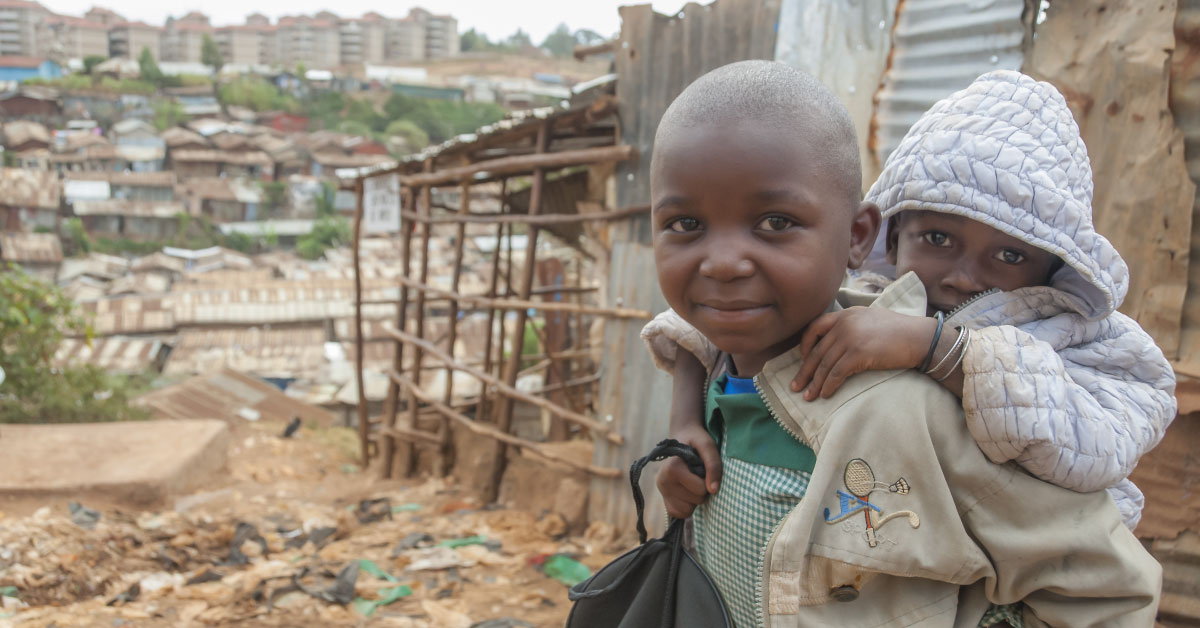
In Kenya, rapid population growth has occurred amidst poor urban governance and limited employment opportunities, leading to widespread urban poverty that is concentrated in informal settlements or slums. In Nairobi, … Read more

On average, in the United States, men earn more per hour when married than when single, even after adjusting for differences such as age and education. However, despite the suggestive … Read more

The postponement of first childbirth has been occurring in most European countries for some decades now. In public and media discussion, delayed childbearing is often rather glibly associated with the … Read more

Parents of one child are commonly confronted by the first child’s persistent pleas for a little brother or sister. However, they might be skeptical about satisfying their child’s request because … Read more

En 2005, l’Espagne est devenue le troisième pays de l’Union Européenne à légaliser le mariage pour les personnes du même sexe, après les Pays Bas en 2001 et la Belgique … Read more

Co-residence between elderly parents and independent, married adult children is a common phenomenon in East Asian societies. For example, according to the 2005 China Inter-Census Survey data, two thirds of … Read more

Introduction Family policy in Sweden is designed to strongly encourage parents (and especially women) to combine work and family formation. The parental leave system makes it profitable for people (women) … Read more

Employment and childbearing are important stages in a woman’s life course. Their relationship is influenced not only by individual characteristics, but also by the socio-economic and institutional context. Availability of … Read more

The incidence of divorce, like the incidence of many other demographic phenomena, varies greatly across the life course. Divorce is most prevalent during young adulthood and relatively infrequent among the … Read more

The number of children individuals would like to have, or would have liked to have had, also known as personal ideal family size, has been stable in the EU-15 as … Read more